Internal operations platforms
One system for the jobs, orders or cases your team now tracks across a spreadsheet, an inbox and a messaging app.
Engineering service / Ali Nawaz
I build custom software for businesses whose key process has outgrown spreadsheets, email threads and generic tools: internal operations systems, approval flows, customer and partner portals, and the reporting that ties them together. It runs in the browser, so your team and your customers use it on any device without installing anything.
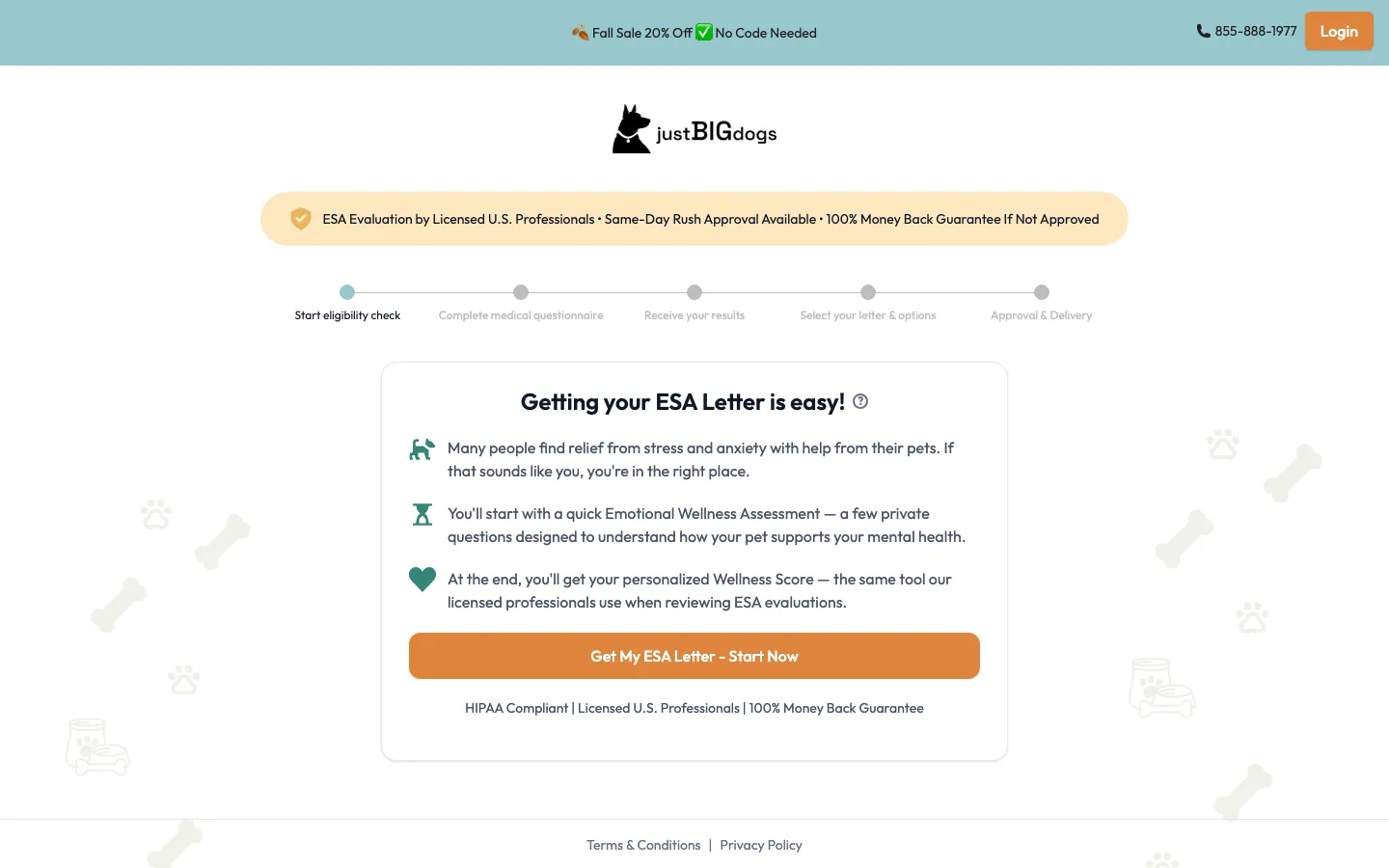 Enlarge screenshot: ESA application start screen
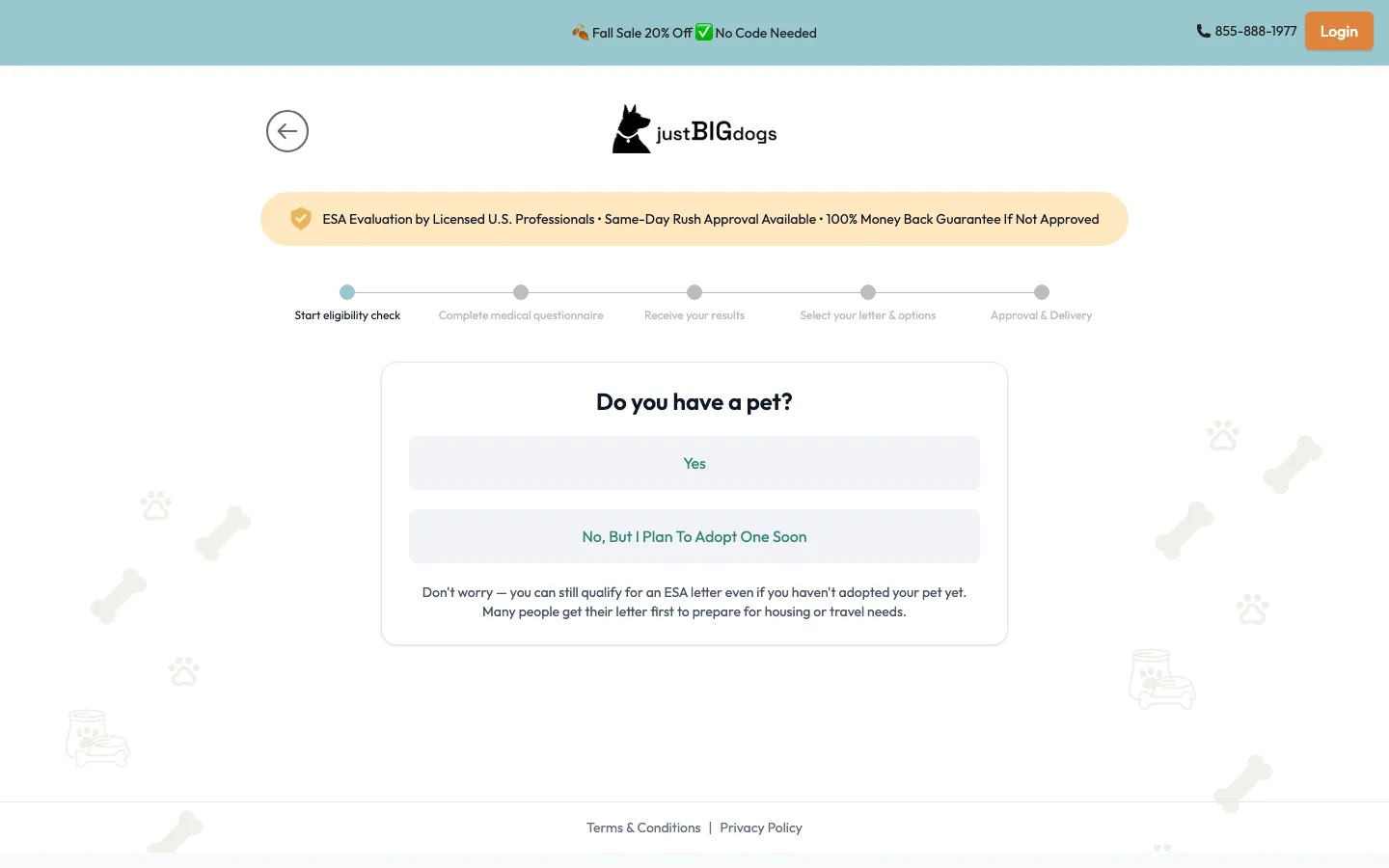
Recent project
Just Big Dogs ESA
Custom web application
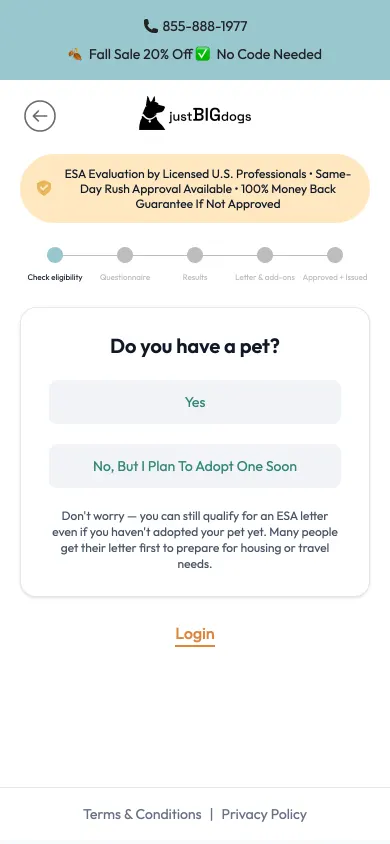
Eligibility check: pet question. Each step of the guided customer journey asks one question and moves the customer forward on a single click.
Read the case studyThe approach
Custom doesn't mean building everything yourself. Login, payments, email delivery and file storage are solved problems, and I use proven services for them. Your budget goes into the part that's specific to your business: the rules, the steps, the exceptions and the data that make your process different from a competitor's.
You work directly with me from requirements through launch. That keeps product context close to technical decisions and avoids the gaps that appear when strategy, interface, backend, and deployment are treated as separate problems.
What I can build
The scope is shaped around your users, operating reality, and the smallest responsible path to value.
One system for the jobs, orders or cases your team now tracks across a spreadsheet, an inbox and a messaging app.
A login area where customers or partners submit requests, upload documents and check progress without calling you.
Multi-step approvals with clear owners, deadlines and reminders, plus a history of every decision.
Reports that pull from the new software and the tools you already pay for, and scheduled jobs that do the copying and chasing people now do by hand.
Build or integrate
This is the usual split. It keeps the build focused on your process and leaves commodity features on services that someone else maintains.
| Capability | Usual approach |
|---|---|
| Your workflow rules and steps | Built custom; this is what you're paying for |
| Login and user management | Built on a proven library or auth service, with roles set up for your team |
| Payments and invoicing | Connected to a payment provider or your accounting tool, not rebuilt |
| Email and SMS | Sent through a delivery service, with templates you can edit |
| File storage | Kept in object storage with access checks, not on the app server's disk |
| Reports | Custom reports for the numbers you run the business on, plus CSV export |
| Existing tools | Connected through their APIs, so nobody types the same data twice |
Signs
The usual signs are practical. One spreadsheet has become the system everyone is afraid to break. Staff copy the same data between two or three tools every day. You pay for a large platform but use a small part of it, and the part you need most doesn't quite work. Or customers keep asking the same status questions because they can't see their own information.
If none of that is true, you may not need custom software yet. A well-configured off-the-shelf tool, or a small integration between two tools you already use, may be enough, and I'll tell you if that's what I see.
Cost of ownership
Off-the-shelf tools charge you every month and handle their own updates. Custom software flips that: you pay once for the build, then for hosting and upkeep. Hosting for a small business application is usually modest, but dependencies need updating, and new needs come up as the team uses it.
Every project includes 15 days of free support after launch. After that, you can keep me on monthly maintenance or bring me in per task. Because the code, the hosting and the documentation are all yours, you can also hand it to another developer at any point.
Starting small
I'd rather build one process completely than five partly. We pick the workflow that wastes the most hours or causes the most errors, build it, put your team on it, and decide the next step from what you learn. Just Big Dogs ESA, linked on this page, is that kind of project: one guided customer process, built as application software rather than a marketing page with a form.
What the work should create
Pricing
How pricing works
Client feedback
Reviews from clients I have worked with remotely, quoted as they wrote them.
The process
You get a senior engineering partner—not a black box. The process stays direct, collaborative, and focused on outcomes.
Clarify the problem, users, constraints, and measure of success.
Shape the right product, technical plan, and delivery path.
Create in focused iterations with quality visible at every step.
Test, deploy, measure, and improve with confidence.
Common questions
I build the parts that are specific to your workflow and connect established services for commodity features like payments, email and login. That keeps the build smaller and leaves less code for you to maintain.
Yes, and it usually should. A first release around one valuable workflow lets you test the approach with your team before investing in the rest.
The final figure depends on the number of user roles, the integrations and any data you need moved in. I send a fixed quote in US dollars after reading your requirements, priced at roughly half of what agencies typically charge.
Usually, as long as the tool has an API. CRMs, accounting software, payment providers and shipping services generally do. I check each one's API documentation during scoping, before quoting.
Yes. I map each column to the new data model, clean up duplicates and inconsistent values, and run test imports on staging before the final import.
You own the code and the data. It's hosted on accounts in your name, and the handover notes explain how to run and update it.
Half when we start and half on final delivery, after your team has tested it on staging. I reply to email within 24 hours, and on WhatsApp usually within an hour.
Start a conversation
Tell me what you’re building, where you are in the process, and what success looks like. I’ll get back to you with a clear next step within 24 hours.
ali@bealinawaz.com