Design-to-WordPress implementation
Each page design is broken into templates and parts before any code is written, then built and matched to the design at desktop, tablet, and phone widths.
Engineering service / Ali Nawaz
I build custom WordPress themes from approved designs, usually a Figma file. The theme carries your layout, typography, and components, and nothing else: no demo content, no bundled slider, no settings panel with hundreds of options. Editors get blocks and patterns that produce on-brand pages, and the code stays small enough for another developer to find their way around it quickly.
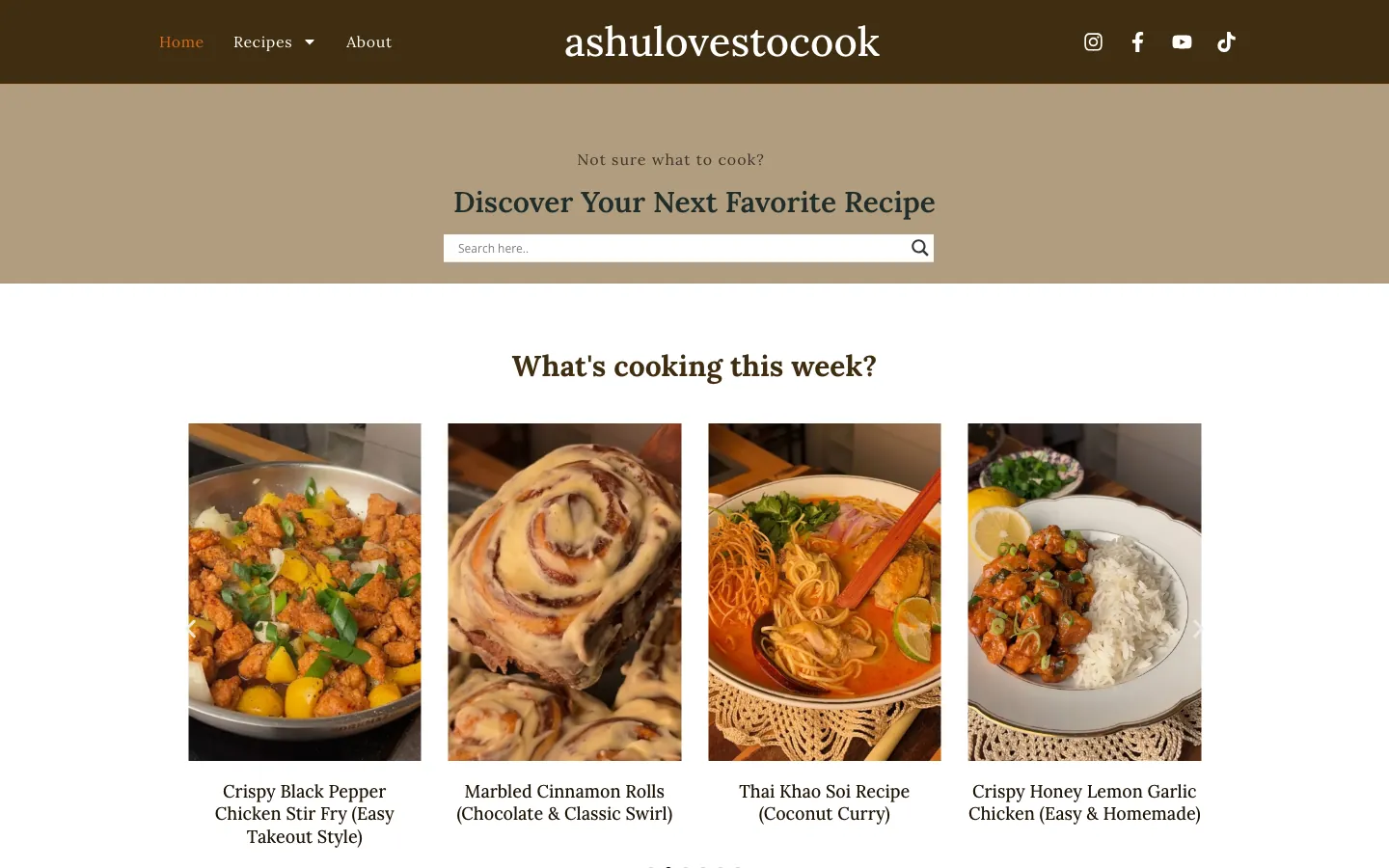 Enlarge screenshot: Recipe blog homepage
Recent project
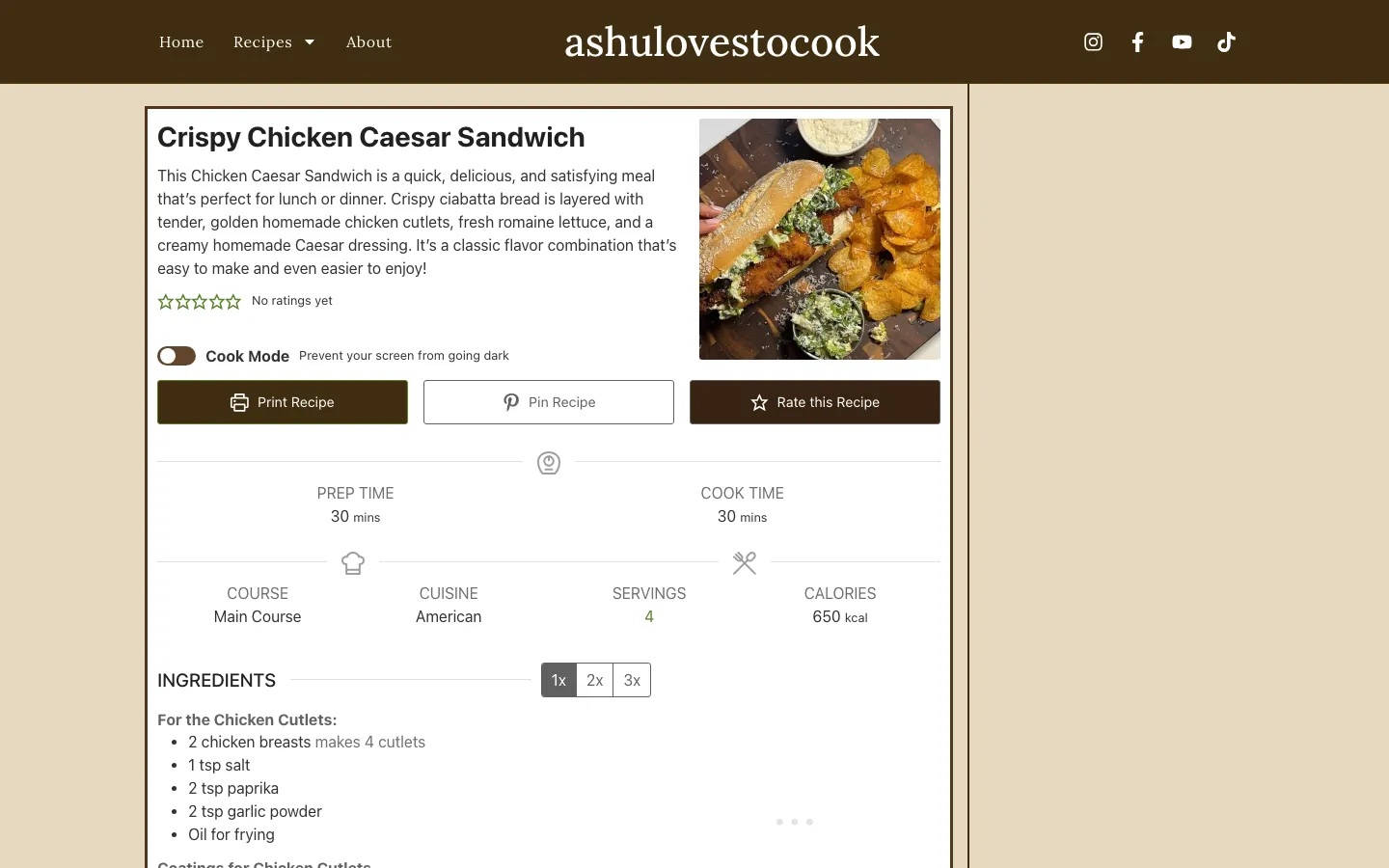
Ashu Loves To Cook
WordPress + Elementor site
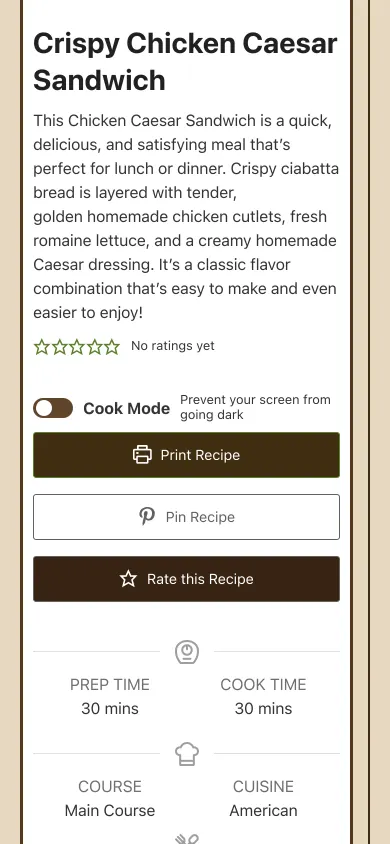
Recipe card with cook mode. Recipe cards with Recipe schema, print and star ratings, plus the custom cook mode switch that keeps the screen awake.
Read the case studyThe approach
A theme should decide how things look, not what the site can do. I keep custom post types, forms, and integrations in plugins, so a future redesign replaces the theme without losing data or features. Inside the theme, templates and blocks follow the real content model, and editor controls are limited to the choices the design allows.
You work directly with me from requirements through launch. That keeps product context close to technical decisions and avoids the gaps that appear when strategy, interface, backend, and deployment are treated as separate problems.
What I can build
The scope is shaped around your users, operating reality, and the smallest responsible path to value.
Each page design is broken into templates and parts before any code is written, then built and matched to the design at desktop, tablet, and phone widths.
Templates for posts, pages, archives, and custom content types, plus custom blocks and patterns your editors insert instead of rebuilding layouts by hand.
Colors, type sizes, and spacing defined once in theme.json, so every block and pattern pulls from the same values and pages stay consistent as the site grows.
Menus, accordions, tabs, and sliders that work with a keyboard and a screen reader, with visible focus states and motion that respects reduced-motion settings.
Deliverables
Every theme project ends with the same handover, so the next developer, or your own team, knows what was built.
| Deliverable | What it contains |
|---|---|
| Theme files | Templates, template parts, theme.json, styles, and scripts, delivered in a Git repository or a zip |
| Custom blocks and patterns | Blocks registered from block.json files, plus patterns for the layouts in the design |
| Site plugin | Post types, taxonomies, and other features that must survive a future theme change |
| Responsive review | Every template checked at phone, tablet, and desktop widths on staging |
| Editor guide | A short written guide or screen recording on building pages with the blocks |
| Launch support | 15 days of free fixes and questions after the theme goes live |
Block or classic
Most new themes I build are block themes. A block theme stores its templates as HTML files made of blocks, reads its design settings from theme.json, and lets an editor adjust headers, footers, and templates in the Site Editor. WordPress needs only two files to treat a theme as a block theme, style.css and templates/index.html, so the starting point is light.
A classic PHP theme still makes sense when the site depends on complex template logic, an older plugin that expects PHP templates, or a team that should not touch layouts at all. Many projects end up as a hybrid: PHP templates for the complex parts, theme.json and custom blocks for editing. I recommend one of the three in writing before the quote.
Theme or plugin
The most common problem I find in inherited themes is functionality living in functions.php: custom post types, shortcodes, tracking scripts, and form handlers. When the owner changes theme, all of it disappears, and products or listings vanish from the admin. I put that code in a small site plugin instead, so it survives any redesign.
The theme keeps templates, styles, patterns, and presentation logic tied to this design, so a styling change can't break a business feature.
Premium themes
Many sites I'm asked to rebuild run a multipurpose theme with its own builder, required plugins, and shortcodes on every page. They load code for features the site never uses, and their shortcodes print as plain text once the theme is gone, so the content has to be converted too.
Before quoting, I run the site through my WordPress Theme & Plugin Detector and crawl its pages to list every template, shortcode, and bundled plugin in use. That list becomes the migration plan. If the premium theme is only a few changes away from what you need, I'll quote a child theme instead.
Process and cost
You send the design files and a list of page types, and I reply within 24 hours with questions, then a fixed quote in US dollars. You review each template on staging as it's finished, and the theme goes live after your final review. Payment is 50% to start and 50% on delivery, with 15 days of free support after launch.
The price follows the number of unique templates, how many custom blocks editors need, interactive components, and whether existing content must be converted. A five-template theme for a service business costs far less than a publication theme with custom archives and filters. My policy is to charge roughly half of what an agency would for the same scope.
What the work should create
Pricing
How pricing works
Proof of work
All 15 are free and open source, so you can read the code before you hire me. See every plugin.
Client feedback
Reviews from clients I have worked with remotely, quoted as they wrote them.
The process
You get a senior engineering partner—not a black box. The process stays direct, collaborative, and focused on outcomes.
Clarify the problem, users, constraints, and measure of success.
Shape the right product, technical plan, and delivery path.
Create in focused iterations with quality visible at every step.
Test, deploy, measure, and improve with confidence.
Common questions
I can, but for distinctive or long-lived products a focused custom theme is often cleaner and easier to maintain.
Yes. I can create custom blocks and patterns so editors compose pages without breaking the approved visual system.
It depends on the number of unique templates, how many custom blocks editors need, and whether content has to be converted from an old theme. Every theme gets a fixed quote in US dollars after I've seen the design.
Yes. Figma is the most common starting point. I ask for desktop and mobile frames for each page type. Where a mobile frame is missing, I follow the design's own spacing and type rules and show you the result on staging before it's final.
No. Posts, pages, and media live in the database, not in the theme. What can break is content tied to the old theme, such as its shortcodes or builder layouts, so I list those first and convert them as part of the project.
You do, once the project is paid. The theme is licensed under the GPL like WordPress itself, with no license key or subscription tied to me.
Start a conversation
Tell me what you’re building, where you are in the process, and what success looks like. I’ll get back to you with a clear next step within 24 hours.
ali@bealinawaz.com