Customer self-service portals
Portals where your customers log in to see their orders, documents, bookings or account status, so fewer questions arrive by email.
Engineering service / Ali Nawaz
I build custom web applications: customer portals, internal tools, dashboards, and booking and management systems that run in the browser. I'm one developer covering the whole job, from mapping how the work happens today to the screens, the database, the server code and the production deployment. You deal with the person writing the code, and you get a fixed quote in US dollars before anything starts.
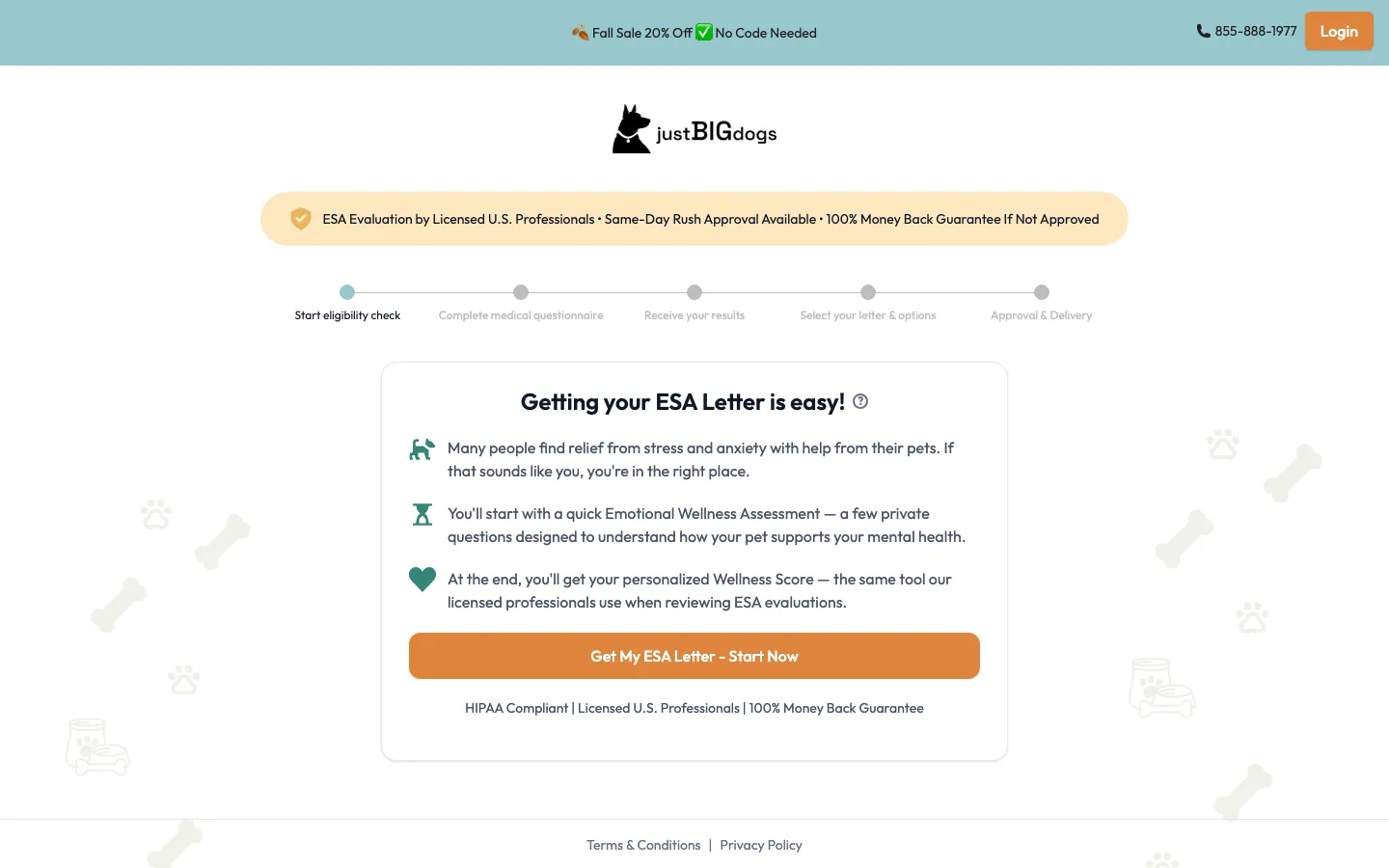 Enlarge screenshot: ESA application start screen
Recent project
Just Big Dogs ESA
Custom web application
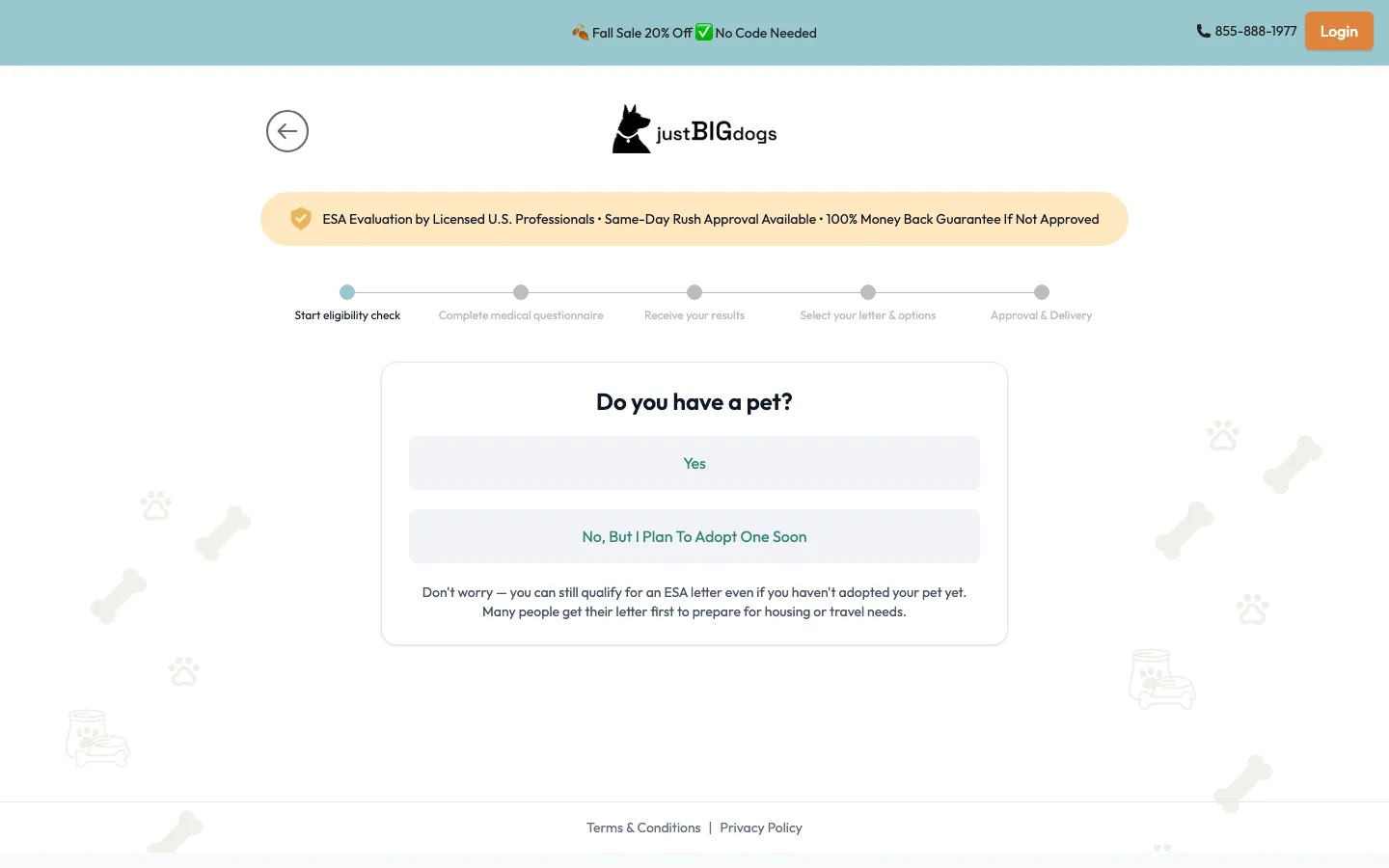
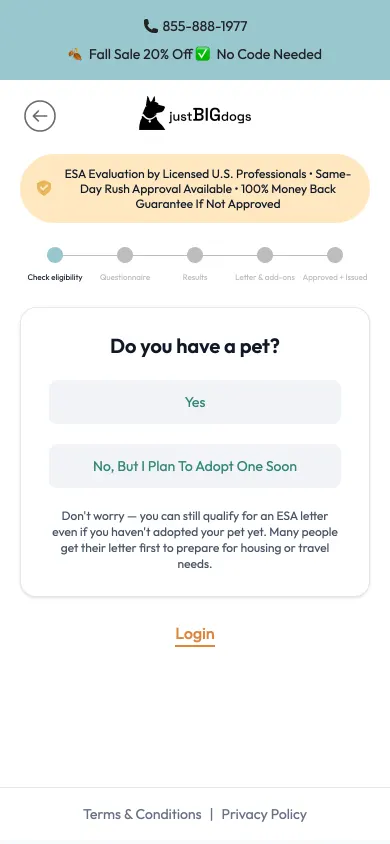
Eligibility check: pet question. Each step of the guided customer journey asks one question and moves the customer forward on a single click.
Read the case studyThe approach
A web application is a model of who does what, with which data, and what happens when something goes wrong. Most of the cost of an app comes from those rules, not from the number of screens. So before I design anything, I write down the users, their roles, the records they create, and the exceptions your team handles by hand today, because that's where an underscoped app breaks.
You work directly with me from requirements through launch. That keeps product context close to technical decisions and avoids the gaps that appear when strategy, interface, backend, and deployment are treated as separate problems.
What I can build
The scope is shaped around your users, operating reality, and the smallest responsible path to value.
Portals where your customers log in to see their orders, documents, bookings or account status, so fewer questions arrive by email.
Tools that replace a shared spreadsheet or a chain of emails: requests, approvals, assignments and status changes, with a record of who did what.
Dashboards built on your own data, with filters, exports and the handful of numbers people actually check, rather than every chart a library can draw.
Booking, listing and management systems with availability rules, notifications, admin screens and payments where the workflow needs them.
Deliverables
Every project ends with the same handover items, so you own and can run what you paid for.
| Deliverable | What it includes |
|---|---|
| Source code | The full repository in your GitHub or GitLab account, with a README that explains how to run it locally |
| Database | The schema with migrations, test data for development, and a backup routine on the live server |
| Staging site | A separate copy where you review every feature before it reaches real users |
| Production deployment | The app on your hosting account, with your domain, SSL and environment settings |
| Admin access | Admin accounts for your team and a short guide to the screens they'll manage |
| Handover notes | Where the secrets live, how to deploy an update, and which outside services the app depends on |
Scoping
I start from your requirements, whatever form they're in: a written brief, the spreadsheet you use today, screenshots of a tool you've outgrown, or notes from a call. From that I write a short scope: the user roles, each screen and what it does, the data each record holds, the emails or notifications the app sends, and what's deliberately left for later.
That last list matters most. A first release that does one workflow completely is worth more than five half-built modules. You approve the scope, I quote a fixed price for it, and changes after that are quoted separately, so neither of us is guessing.
Cost drivers
The cost of a custom application depends on things you can spot in your own requirements. Each extra user role multiplies the screens and permission checks. Every outside system, such as a payment provider, a CRM or an accounting tool, adds integration and testing time. Importing old data from spreadsheets or another system is often a job of its own.
Other drivers are less obvious: audit trails, file uploads with previews, multi-language interfaces, and reports that must match a format your accountant already uses. I point these out in the scope so they're priced on purpose, not discovered halfway through.
Build or buy
If an existing product handles nearly all of your process and the gap is a report or a small automation, paying for that product and connecting it is usually cheaper than building. I'll say so when that's the case. Custom pays off when the workflow is how you compete, when per-seat fees for a generic tool keep climbing, or when the data has to live somewhere you control.
SavyDive, a SaaS product for Walmart sellers that I built, shows the other side: no off-the-shelf tool turned that marketplace data into the dashboards, alerts and comparisons its users needed.
What the work should create
Pricing
How pricing works
Client feedback
Reviews from clients I have worked with remotely, quoted as they wrote them.
The process
You get a senior engineering partner—not a black box. The process stays direct, collaborative, and focused on outcomes.
Clarify the problem, users, constraints, and measure of success.
Shape the right product, technical plan, and delivery path.
Create in focused iterations with quality visible at every step.
Test, deploy, measure, and improve with confidence.
Common questions
I start with the users, the jobs they need to get done, the data involved and the riskiest part of the idea, then define the smallest release that's useful on its own. You get that scope in writing, with a fixed quote against it.
A multi-role app with integrations costs considerably more than a simple one. I don't use price lists: I read your requirements and quote a fixed amount in US dollars. My pricing policy is roughly half of what agencies charge for comparable work.
It depends on the scope, so I give a timeline with the quote rather than a general number. A single-workflow tool moves much faster than a platform with several roles and integrations, which is one more reason to keep the first release narrow.
Usually React or Next.js for the interface, Node.js with Express for the server, and MySQL, PostgreSQL or MongoDB for the data, chosen by how the records relate to each other. If you already have a stack, I work within it.
Yes. The code lives in a repository you control, and the app runs on hosting accounts in your name. Nothing about the project depends on staying with me.
50% to start and 50% on final delivery, after you've reviewed the finished app on staging. Invoices are in US dollars.
Yes. Each project includes 15 days of free support after launch. After that I can work on a monthly maintenance plan, or per task as new features come up.
Start a conversation
Tell me what you’re building, where you are in the process, and what success looks like. I’ll get back to you with a clear next step within 24 hours.
ali@bealinawaz.com