SaaS application data
Users, accounts, plans and records for web apps, modeled as related tables with keys the database enforces.
Technology expertise / Ali Nawaz
MySQL is the database I've worked with longest, because every WordPress and WooCommerce site I've built since 2017 runs on MySQL or its close relative MariaDB. I also use it for custom applications. My experience runs from writing safe queries through WordPress's $wpdb class to designing schemas, indexes and migrations for apps where the data is the product.
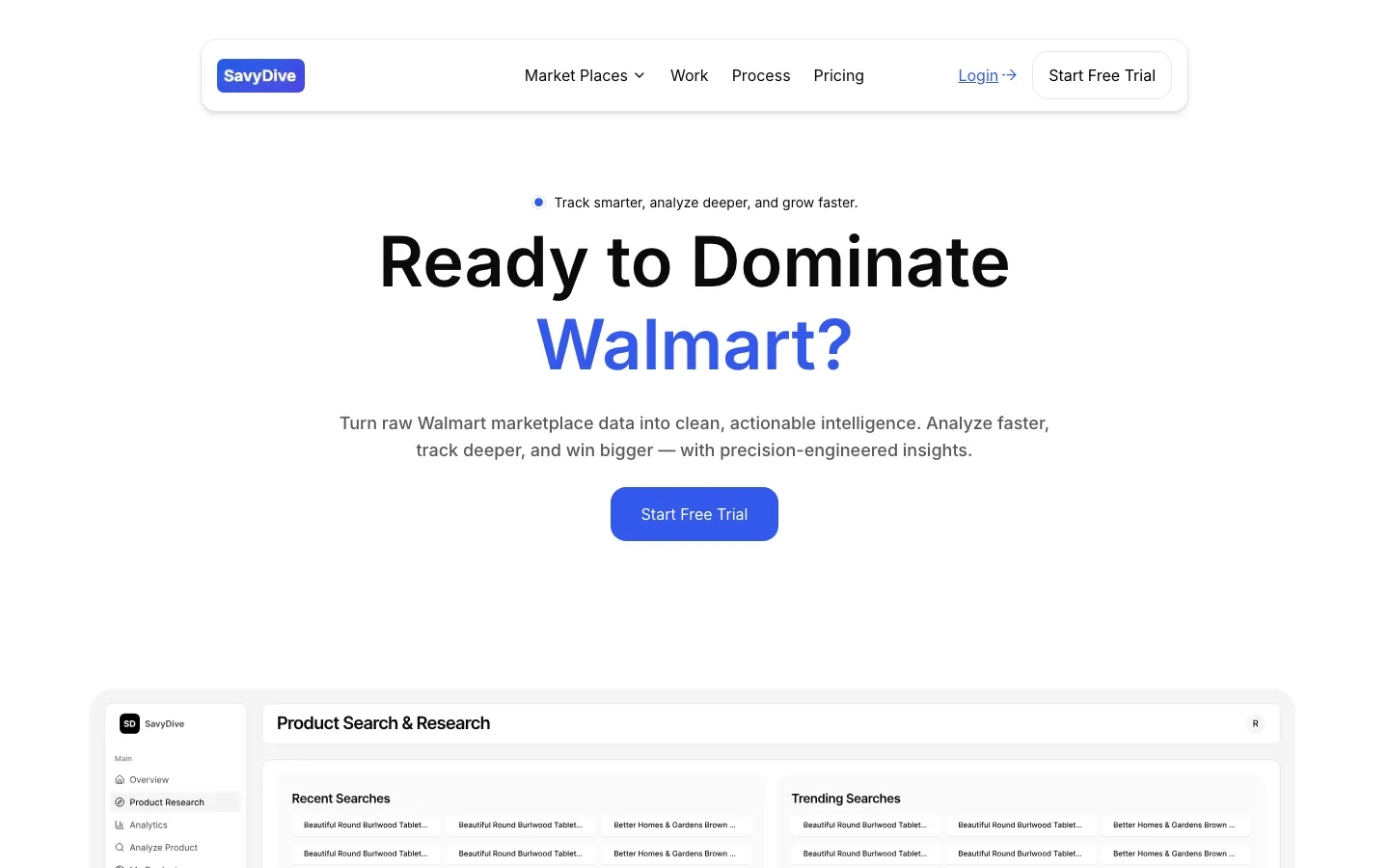 Enlarge screenshot: SavyDive homepage hero
Recent project
SavyDive
SaaS product
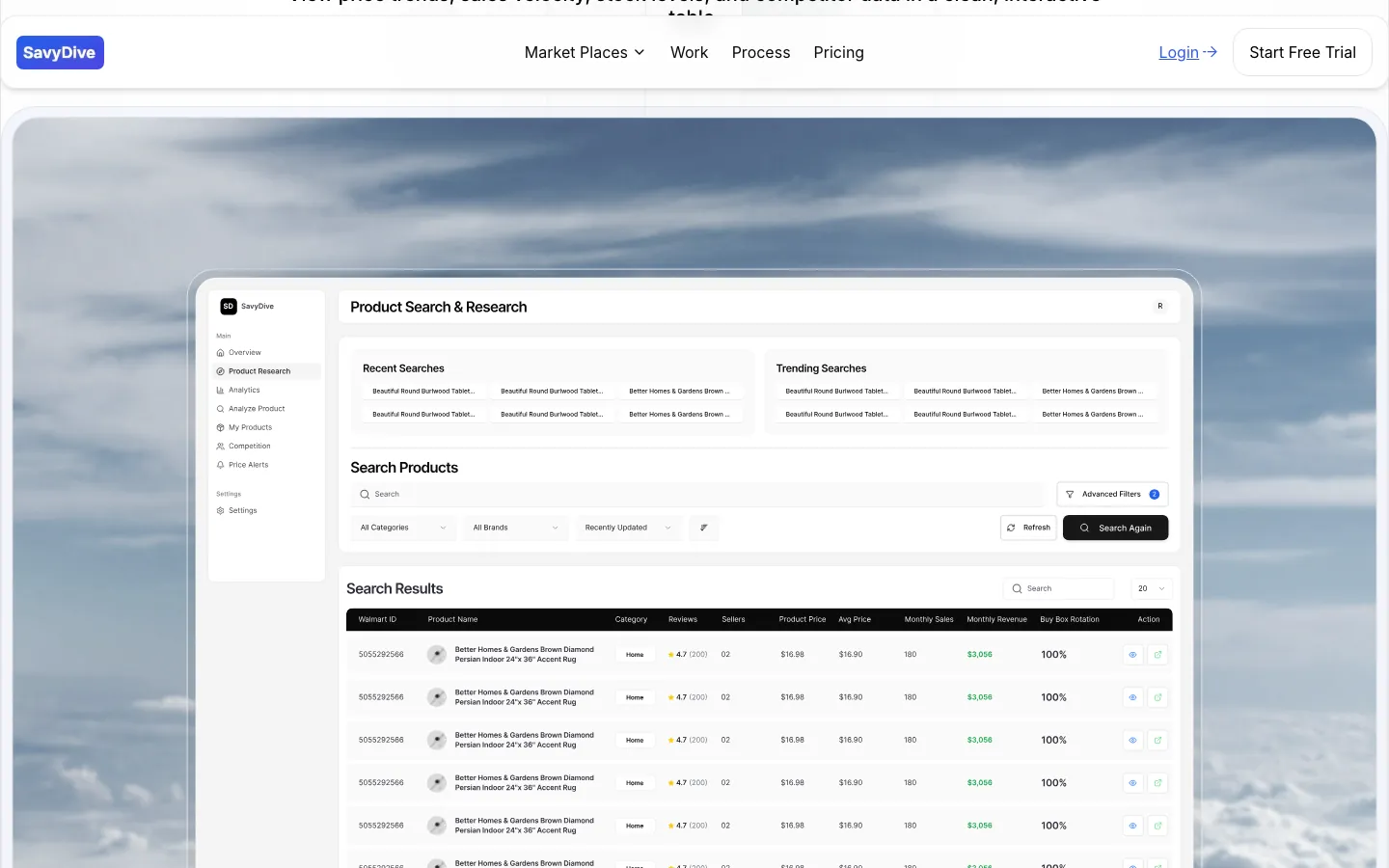
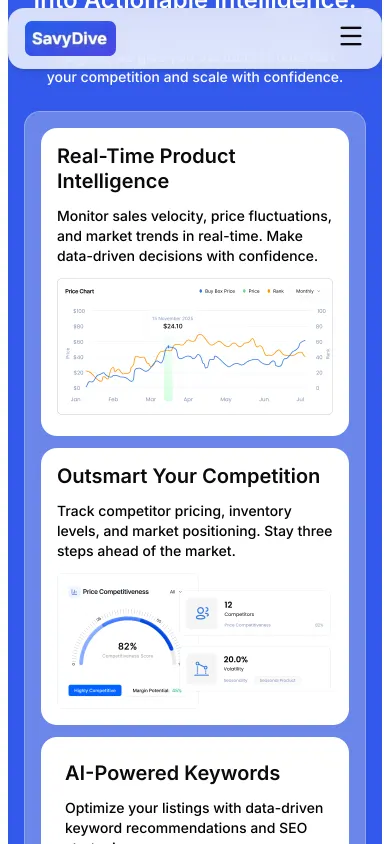
Product research dashboard. A data-rich research dashboard that lets sellers search, filter and compare Walmart products in one table.
Read the case studyThe approach
MySQL is fast and forgiving, and the forgiving part is what causes trouble. It will happily store a string where a number belongs or accept an order with no customer if the schema allows it. I make the schema say what the business means: proper types, foreign keys, unique keys and NOT NULL where a value is required, so bad data is rejected at the door rather than cleaned up later.
You work directly with me from requirements through launch. That keeps product context close to technical decisions and avoids the gaps that appear when strategy, interface, backend, and deployment are treated as separate problems.
What I can build
The scope is shaped around your users, operating reality, and the smallest responsible path to value.
Users, accounts, plans and records for web apps, modeled as related tables with keys the database enforces.
Custom tables for WordPress plugins when post meta would be too slow, created with dbDelta and removed cleanly on uninstall.
Orders, payments and bookings written inside transactions, so a failure never leaves a partial record.
Summary tables and indexes that let reports run without slowing the live site.
Practices
These rules come from real problems in WordPress and custom app databases.
| Practice | What it prevents |
|---|---|
| utf8mb4 for all text | Broken emoji and characters in names or reviews, which the older utf8 setting can't store |
| InnoDB with foreign keys | Orders that point to deleted customers, and half-saved data when a request fails mid-way |
| Prepared statements, always | SQL injection through search boxes, form fields and URL parameters |
| Indexes designed from real queries | Full table scans on pages that filter or sort, and unused indexes that slow every write |
| Versioned migrations | Schema changes applied by hand on one server and forgotten on another |
| Money as DECIMAL, not FLOAT | Rounding errors in prices, taxes and totals |
MySQL inside WordPress
WordPress stores most data in a few general tables: posts, post meta, options and users. That's flexible but slow for some queries, because meta values aren't indexed for searching or sorting. A store that filters thousands of products by a custom field can grind on a meta query. The fix is often a custom table with the right columns and indexes, written to through a small plugin API.
WooCommerce took that route itself with High-Performance Order Storage, which moves orders out of the posts tables into dedicated order tables. My WooCommerce plugins, such as Halfway – Deposits & Partial Payments for WooCommerce and Checkout Delivery Options for WooCommerce, read and write orders through WooCommerce's own order API so they work with either storage. My WordPress Password Hash Generator even outputs the SQL to reset a password directly in phpMyAdmin, for the day you're locked out.
Pitfalls
Tables still on MyISAM, which has no transactions and locks whole tables on write. Autoloaded options in WordPress adding megabytes to every page load. Queries with a leading wildcard in LIKE, which can't use an index. SELECT * in loops that run once per row instead of one query with a join. Missing indexes on the columns used to join tables. And backups that exist but have never been restored to prove they work.
Schema changes
Adding a column or index to a large table can lock it while the change runs. On a busy site I check whether the change can run online, schedule it for low traffic, and split risky changes into steps: add the new column, backfill it in batches, switch the code, then remove the old column. Every step is a migration file that can be replayed on staging first.
What the work should create
Pricing
How pricing works
Client feedback
Reviews from clients I have worked with remotely, quoted as they wrote them.
The process
You get a senior engineering partner—not a black box. The process stays direct, collaborative, and focused on outcomes.
Clarify the problem, users, constraints, and measure of success.
Shape the right product, technical plan, and delivery path.
Create in focused iterations with quality visible at every step.
Test, deploy, measure, and improve with confidence.
Common questions
MySQL 8.4 LTS for new work, MariaDB where a host provides it, and older installs during upgrades. MySQL 8.0 reached end of life in April 2026, and Oracle points users to 8.4 LTS, so a site still on 8.0 should plan that move.
Both are solid. I lean to MySQL when the app sits next to WordPress or the host only offers MySQL, and to PostgreSQL when the data needs richer constraints, JSON queries or row-level security. Team familiarity counts too.
I find the slow ones in the slow query log or by timing pages, run EXPLAIN on each, then add the index the query actually needs or rewrite it. Often one composite index in the right column order fixes a page that took seconds.
Through WordPress's $wpdb class with prepared statements for anything that includes user input, and through WordPress and WooCommerce APIs wherever they exist, so the plugins keep working with WooCommerce's High-Performance Order Storage tables.
Usually, yes. Common causes are expired transients, autoloaded options that load on every page, years of post revisions, and logs left by old plugins. I back up first, then clean and index carefully.
My database development service page covers schema design, migrations and performance projects, with pricing.
Start a conversation
Tell me what you’re building, where you are in the process, and what success looks like. I’ll get back to you with a clear next step within 24 hours.
ali@bealinawaz.com