REST APIs and application backends
The server side of a web or mobile app, with endpoints shaped around your screens and business rules rather than raw database tables.
Engineering service / Ali Nawaz
I build Node.js backends for web apps, SaaS products and online businesses: the API your front end or mobile app calls, sign-in and permissions, payment and CRM integrations, scheduled jobs and the admin tools your team uses to see what's going on. I write it in TypeScript, deploy it to hosting in your name, and document it so another developer can run it without me.
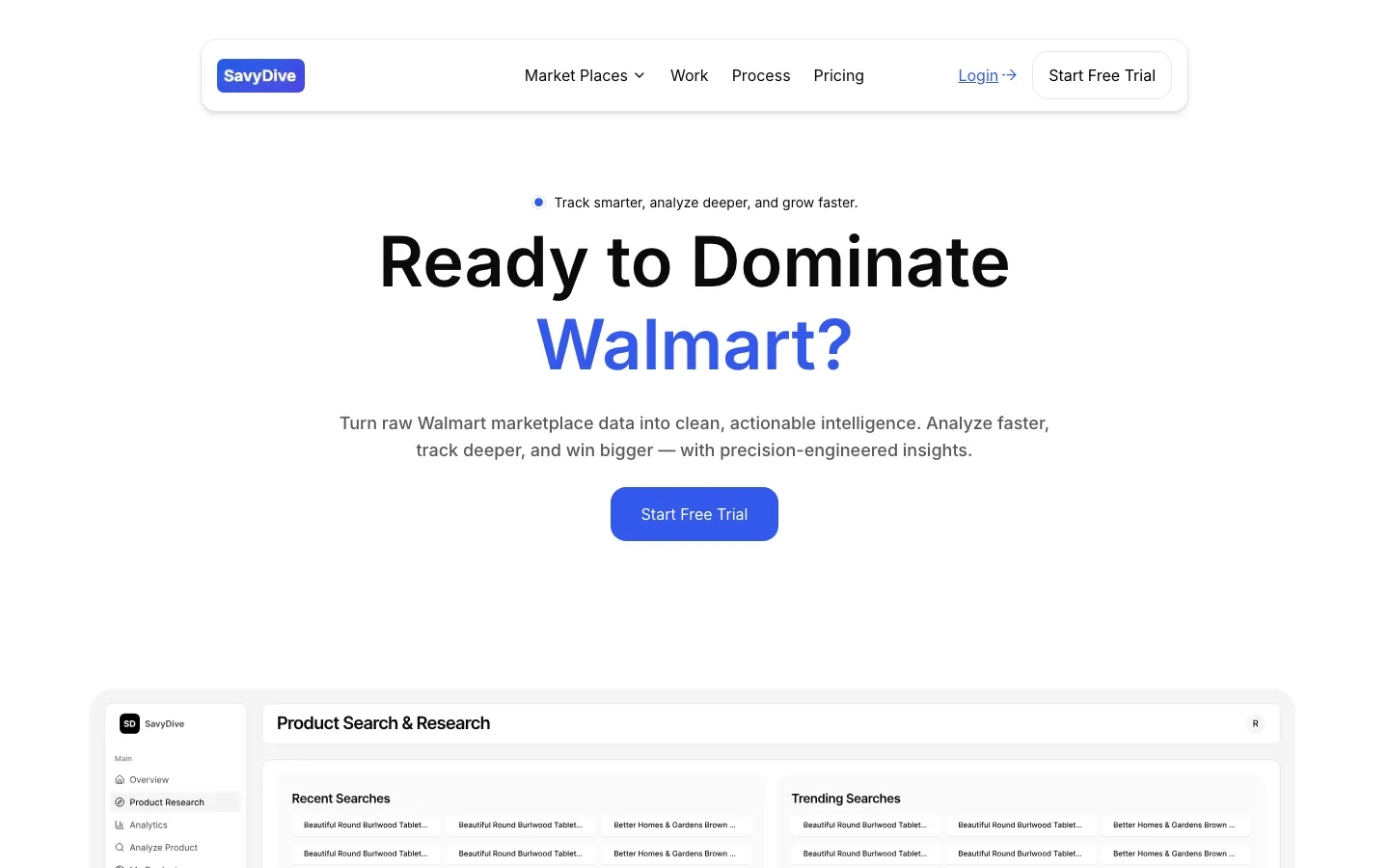 Enlarge screenshot: SavyDive homepage hero
Recent project
SavyDive
SaaS product
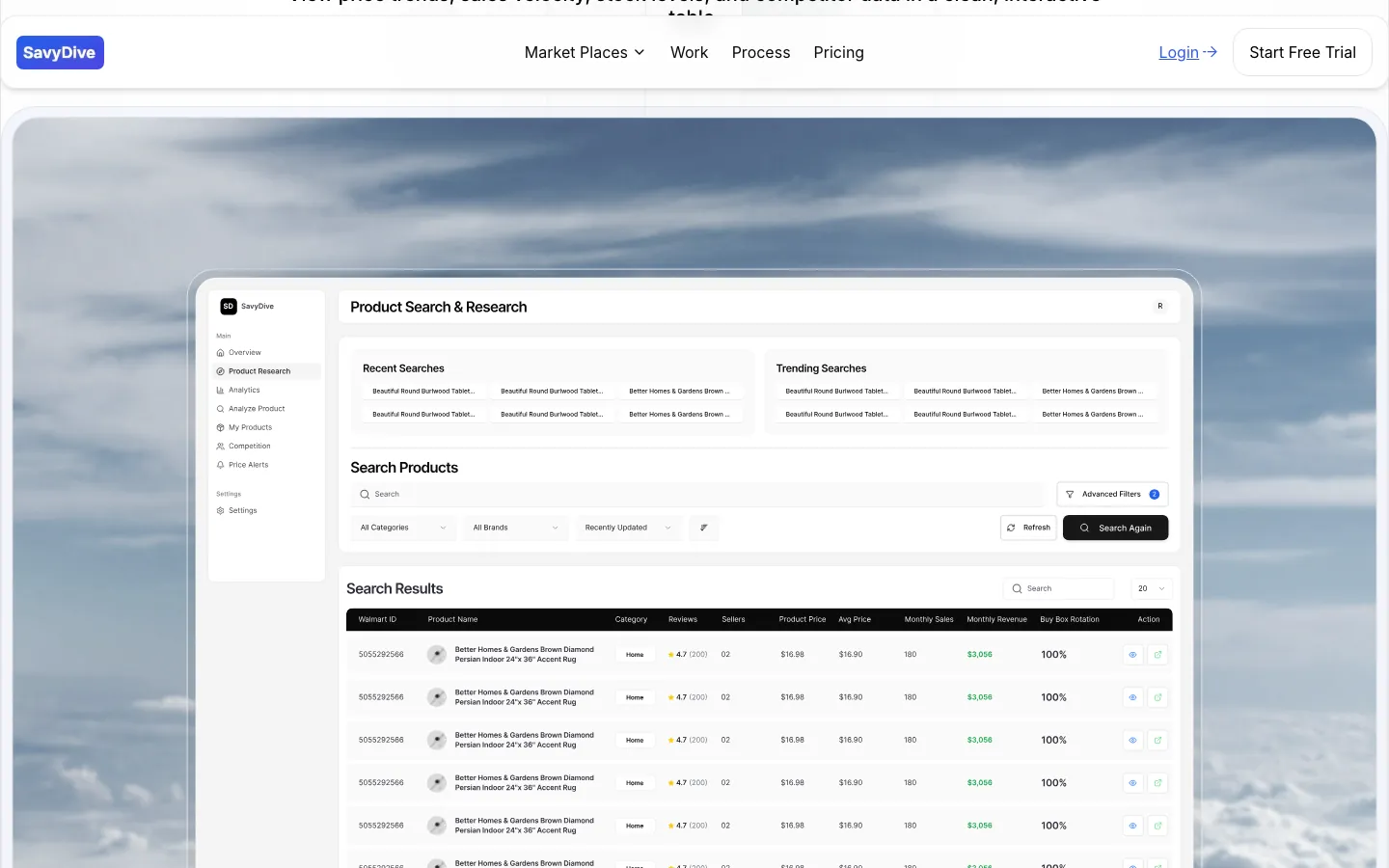
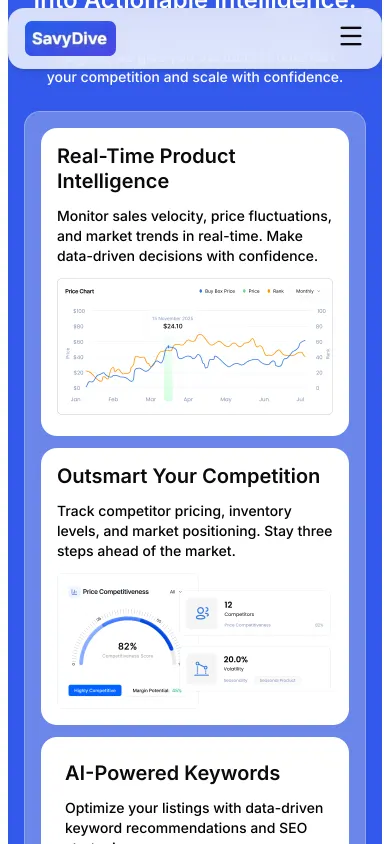
Product research dashboard. A data-rich research dashboard that lets sellers search, filter and compare Walmart products in one table.
Read the case studyThe approach
A backend is judged on its bad days. When a payment webhook arrives twice, a partner API is down or a user sends a broken form, the system should do the right thing and leave a clear record. I plan those cases in the scope, not after launch, so you're paying for a backend that handles problems instead of one that only works in a demo.
You work directly with me from requirements through launch. That keeps product context close to technical decisions and avoids the gaps that appear when strategy, interface, backend, and deployment are treated as separate problems.
What I can build
The scope is shaped around your users, operating reality, and the smallest responsible path to value.
The server side of a web or mobile app, with endpoints shaped around your screens and business rules rather than raw database tables.
Sign-up, login, password reset, teams and roles, with permission checks on the server for every action.
Endpoints that receive events from Stripe, Shopify, a CRM or another platform, verify them, and process each one exactly once.
Nightly imports, report generation, email sends and data syncs that run on a schedule and retry safely when they fail.
Deliverables
These are the pieces I include in a typical backend quote. If a quote you're comparing doesn't mention them, ask whether they're covered.
| Deliverable | What it covers |
|---|---|
| API endpoints | The routes your app needs, with input validation and consistent success and error responses |
| Sign-in and permissions | Accounts, sessions or tokens, password resets, and role checks on every request that reads or changes data |
| Database and migrations | Tables or collections designed for your data, with versioned migrations so changes can be repeated safely |
| Integrations | Payment, CRM, email or other APIs, with webhook signature checks, retries and duplicate protection |
| Background jobs | Scheduled tasks and queued work such as imports, reports and emails, kept out of the request path |
| Logs and errors | Structured logs and error alerts, so problems are visible before customers report them |
| Documentation | How to run, configure and deploy the service, plus the API contract for front-end or partner developers |
Scoping
I start from what the users and other systems do: who signs in, what they create or change, which outside services are involved, and what has to happen automatically. From that I write a short list of endpoints, data and jobs, plus the failure cases that matter, such as a payment that succeeds but the confirmation email fails. You approve that list, and it becomes the fixed quote.
If the front end is being built by someone else, I agree the API contract with them first. Both sides can then work in parallel against the same written shapes for requests and responses.
Cost drivers
The number of integrations matters most, because each outside service has its own authentication, limits and failure modes. Next is the permission model: one admin and many customers is simpler than teams with several roles. Data migration from an old system, real-time features, file uploads and processing, and reporting also add work.
A backend with a few clear endpoints and one integration is a modest project. A platform with several partners, billing and roles is a larger one, and I'd suggest launching the core first.
Freelancer or agency
Many Node.js vendors sell dedicated developers by the month. I take fixed-scope projects instead, and because I write React and Next.js interfaces as well, the API is designed around the screens that use it. There's no hand-off between a backend team and a frontend team where details get lost. For a large team working in parallel, an agency is the better choice.
What the work should create
Pricing
How pricing works
Client feedback
Reviews from clients I have worked with remotely, quoted as they wrote them.
The process
You get a senior engineering partner—not a black box. The process stays direct, collaborative, and focused on outcomes.
Clarify the problem, users, constraints, and measure of success.
Shape the right product, technical plan, and delivery path.
Create in focused iterations with quality visible at every step.
Test, deploy, measure, and improve with confidence.
Common questions
The cost depends on the number of endpoints and data models, the authentication, and the outside services involved; fixing one bug in an existing backend is a much smaller job than building a new one. You get one fixed quote in US dollars after I've read the requirements, with no hourly meter running. As a policy, I charge roughly half the usual agency price.
Yes. I connect payment providers, CRMs, email and SMS services, shipping and accounting tools, and AI APIs, with signed webhooks, retries, duplicate protection and a log your team can check when something looks wrong.
MySQL, PostgreSQL and MongoDB. For most business apps with orders, users and invoices I recommend PostgreSQL or MySQL, because relationships and transactions matter. MongoDB fits when records are naturally self-contained documents.
A current Long Term Support release. As of November 2026, Node.js 22, 24 and 26 are all LTS lines. I pick one with plenty of support time left and note the end-of-life date in the handover, so upgrades are planned.
On a VPS, a managed platform or a cloud provider such as AWS or Google Cloud, depending on traffic, budget and who maintains it. Accounts are opened in your name, and secrets are stored in the host's environment settings, not in the code.
Yes. I run it locally, read the code and logs, and send you a short written review of risks and quick wins before quoting changes.
Payment is split in two: half upfront, half when the finished backend is delivered and you've checked it on staging. After launch, 15 days of support are included at no cost, then monthly maintenance or per-task help. I reply within 24 hours, and faster on WhatsApp.
Start a conversation
Tell me what you’re building, where you are in the process, and what success looks like. I’ll get back to you with a clear next step within 24 hours.
ali@bealinawaz.com