Application and partner REST APIs
REST endpoints with authentication, role checks, pagination and documented error shapes, for your own front end or for partners.
Engineering service / Ali Nawaz
I design and build APIs for web and mobile front ends, partner systems and business integrations, and I connect your product to other companies' APIs: payment providers, CRMs, shipping services, AI models and marketplaces. Each endpoint is shaped around a real workflow, not copied straight from the database tables.
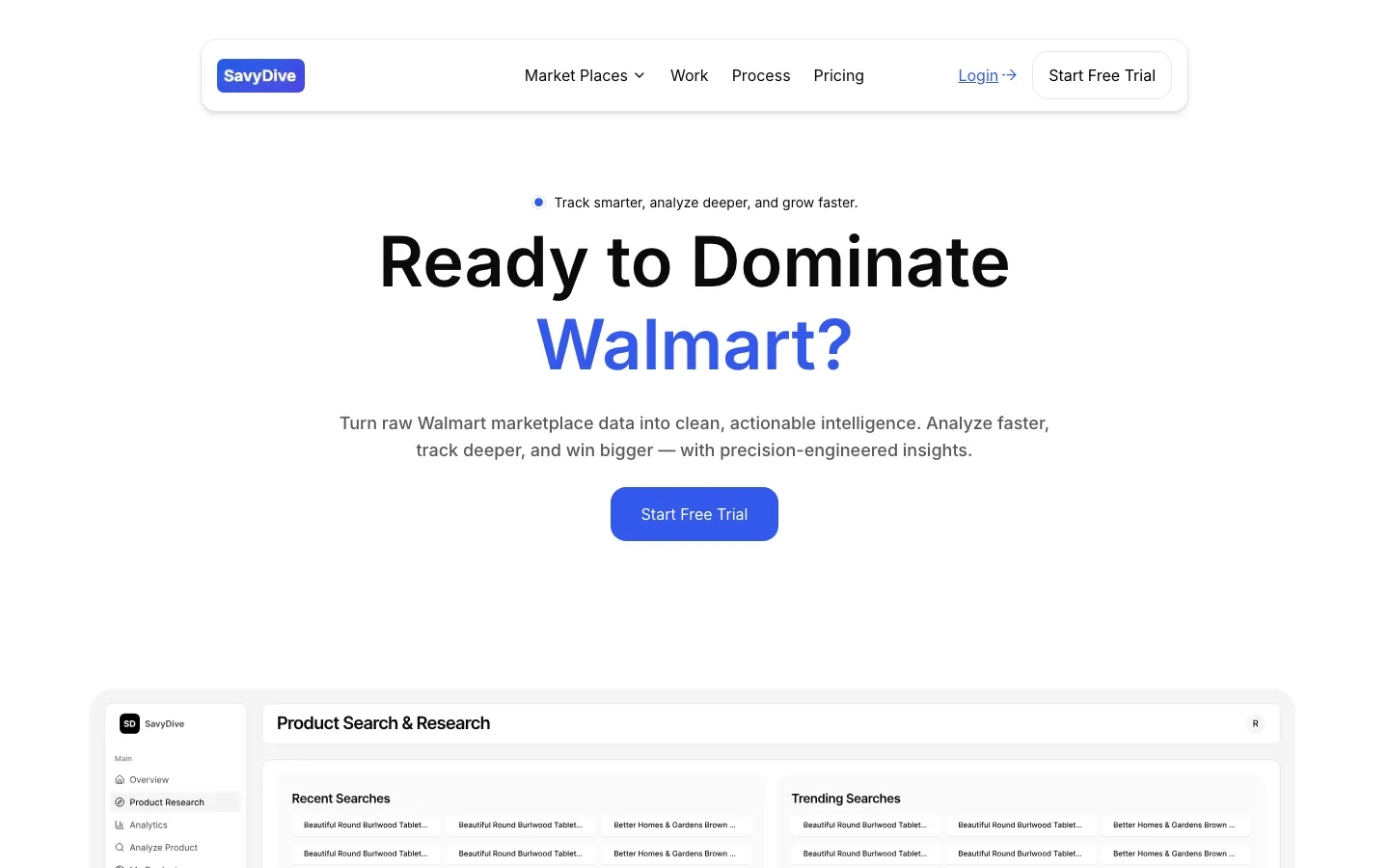 Enlarge screenshot: SavyDive homepage hero
Recent project
SavyDive
SaaS product
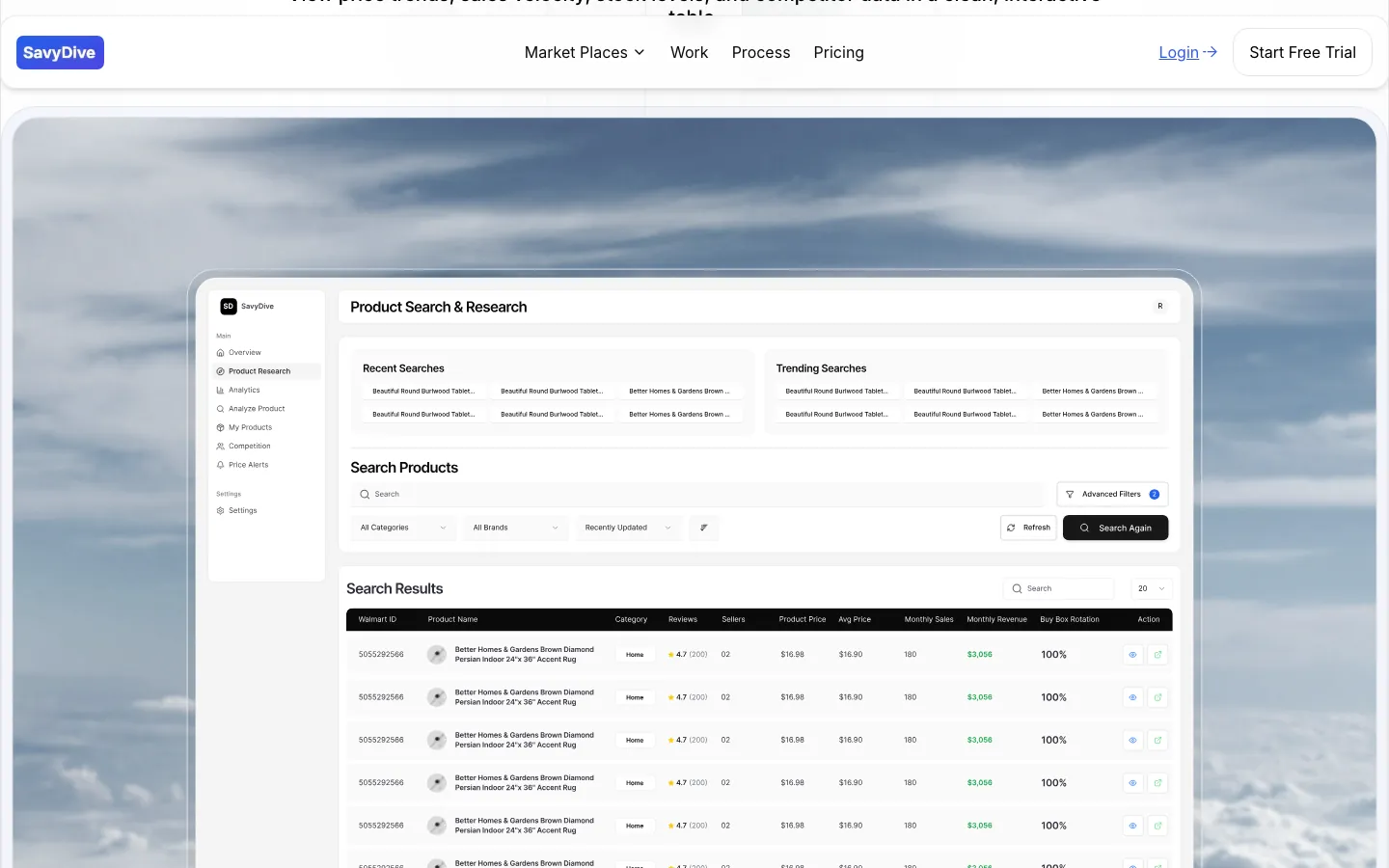
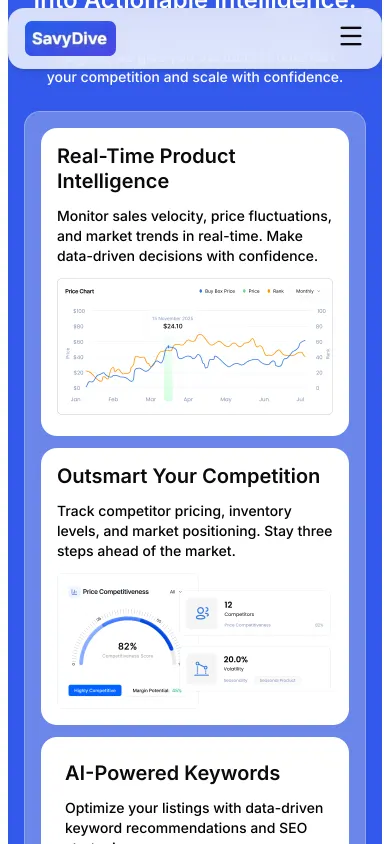
Product research dashboard. A data-rich research dashboard that lets sellers search, filter and compare Walmart products in one table.
Read the case studyThe approach
Most API problems show up at the edges: a webhook that arrives twice, a partner who sends a field in the wrong format, a token that expires mid-sync, a list endpoint that times out at ten thousand records. I design for those cases from the start, with validation, idempotency, pagination, retries and clear error responses, because that's where integrations fail in production.
You work directly with me from requirements through launch. That keeps product context close to technical decisions and avoids the gaps that appear when strategy, interface, backend, and deployment are treated as separate problems.
What I can build
The scope is shaped around your users, operating reality, and the smallest responsible path to value.
REST endpoints with authentication, role checks, pagination and documented error shapes, for your own front end or for partners.
Connections to payment, CRM, email, shipping and AI provider APIs, with tokens stored on the server and rate limits respected.
Webhook receivers that verify signatures and ignore duplicates, and webhook senders that sign payloads and retry failed deliveries.
Scheduled or event-driven sync between two systems, with logs that show exactly which record failed and why.
Design decisions
Every API needs these settled early. The usual answer is where I start; your use case can change it.
| Decision | Usual answer |
|---|---|
| REST or GraphQL | REST for most products and partner APIs; GraphQL when clients need nested data from many resources in one request |
| Authentication | Session cookies for your own web app, API keys or OAuth for partners, short-lived tokens for mobile apps |
| Versioning | A version in the URL for public APIs, so old clients keep working while new versions ship |
| Pagination | Cursor-based for large or fast-changing lists; page numbers only for small, stable ones |
| Errors | One consistent error format with a machine-readable code and a human-readable message |
| Rate limits | Limits per key or per user, with headers that tell clients when to retry |
| Idempotency | An idempotency key on any request that creates a record or charges money |
Contract first
Before building, I write the API contract: the resources, each endpoint's request and response, authentication, error codes and pagination. For anything partners or other developers will use, I document it as an OpenAPI specification, which also gives them interactive docs and lets them generate client code.
The contract is something both sides can review. Your front-end developer, a partner's team or a mobile developer can start building against it while I write the server, and disagreements surface on paper instead of in production.
Webhooks
Receiving a webhook seems simple. But providers retry when your server is slow, so the same event can arrive more than once, events can arrive out of order, and anyone can send a request to a public URL. I verify each provider's signature, store the event ID to skip duplicates, respond quickly, and do the slow work in a background job.
Sending webhooks is a bigger job: signed payloads, retries with backoff, a log of failed deliveries and a way to replay them. That's often why an integration quote rises, so I list it separately and you decide whether it belongs in the first release.
Proof
Two of my free WordPress.org plugins are API work you can read. SubmitDock turns WordPress into a form backend: a static site, a React or Next.js front end, or a mobile app posts to its REST endpoint, and each submission is saved and emailed. WP to Firebase keeps Cloud Firestore or a Firebase Realtime Database in step with a WordPress store, sending products, orders and users in background batches. The free tools on this site also run on a small API I wrote.
What the work should create
Pricing
How pricing works
Client feedback
Reviews from clients I have worked with remotely, quoted as they wrote them.
The process
You get a senior engineering partner—not a black box. The process stays direct, collaborative, and focused on outcomes.
Clarify the problem, users, constraints, and measure of success.
Shape the right product, technical plan, and delivery path.
Create in focused iterations with quality visible at every step.
Test, deploy, measure, and improve with confidence.
Common questions
Both. I build APIs for your product and connect it to outside services such as payment providers, CRMs, analytics, AI providers and marketplaces.
With scoped authentication, role or policy checks on every endpoint, input validation, rate limiting, secrets kept on the server, logging, and network rules on the hosting. The exact set depends on who calls the API and what data it exposes.
Yes. I write an OpenAPI specification with examples and error responses, so other developers can try endpoints and generate client code from it.
The main cost drivers are the number of endpoints, the authentication model, each outside system involved, and whether you need outgoing webhooks. I quote a fixed price in US dollars after reading the requirements.
Mostly Node.js with Express, and PHP when the API lives inside WordPress or on PHP hosting. Where I can, I match the stack your product already runs on.
Yes. I start with the logs and the provider's documentation, reproduce the failure, and fix the cause, whether that's an expired token, a changed field, a missed retry or a duplicate event.
Half to start and half on final delivery, after you've tested on staging. Fifteen days of free support follow the launch, with monthly maintenance or per-task work available after that.
Start a conversation
Tell me what you’re building, where you are in the process, and what success looks like. I’ll get back to you with a clear next step within 24 hours.
ali@bealinawaz.com