REST and partner APIs
APIs your own apps call and APIs you expose to partners, with versioned routes and documented request and response shapes.
Engineering service / Ali Nawaz
I build Express.js APIs and backends: REST endpoints for web and mobile apps, partner APIs, webhook receivers and admin backends, with validation, authentication, consistent errors and documentation included. I also upgrade and clean up existing Express apps, including moving them from Express 4 to Express 5, so you can keep a working product instead of starting over.
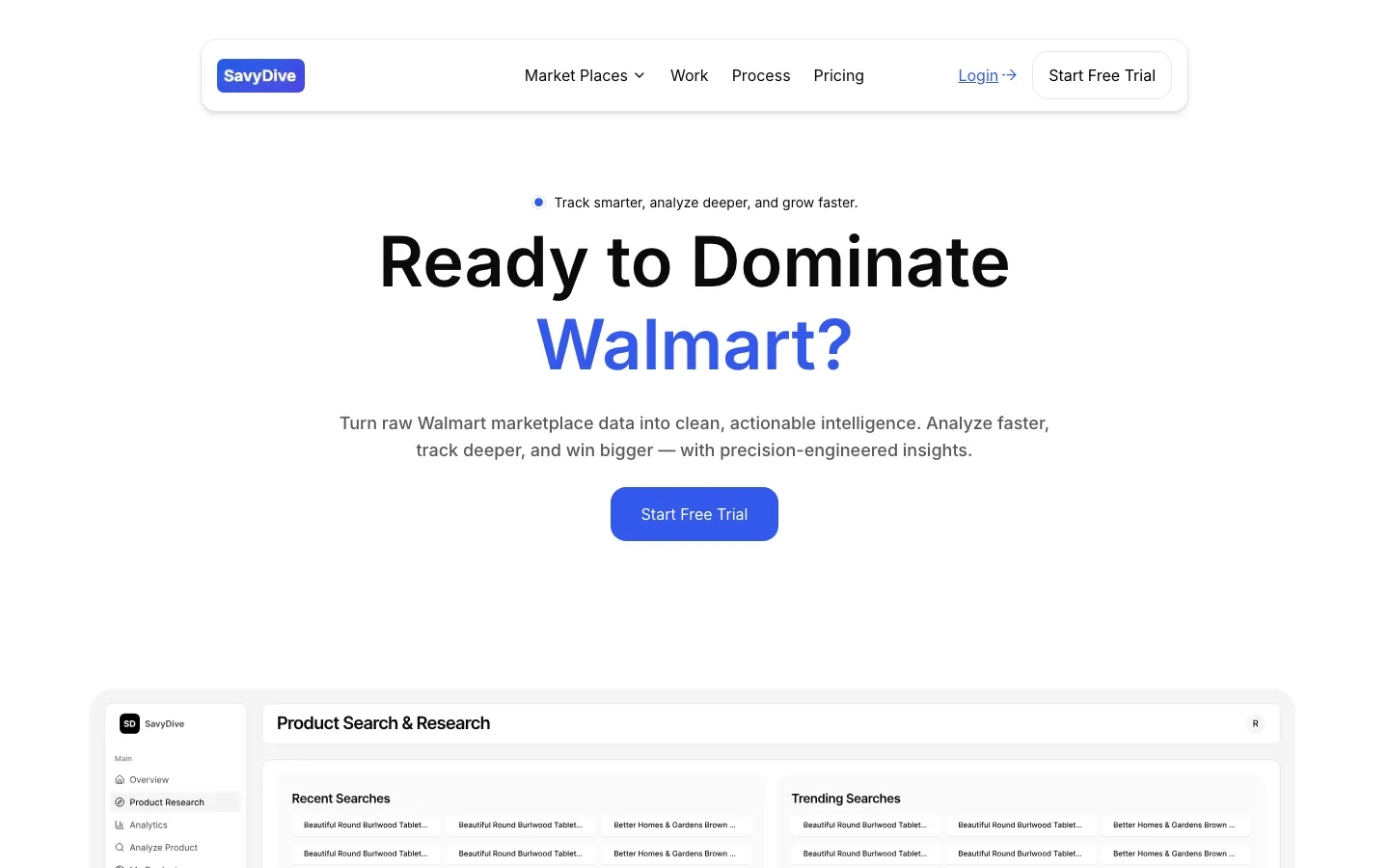 Enlarge screenshot: SavyDive homepage hero
Recent project
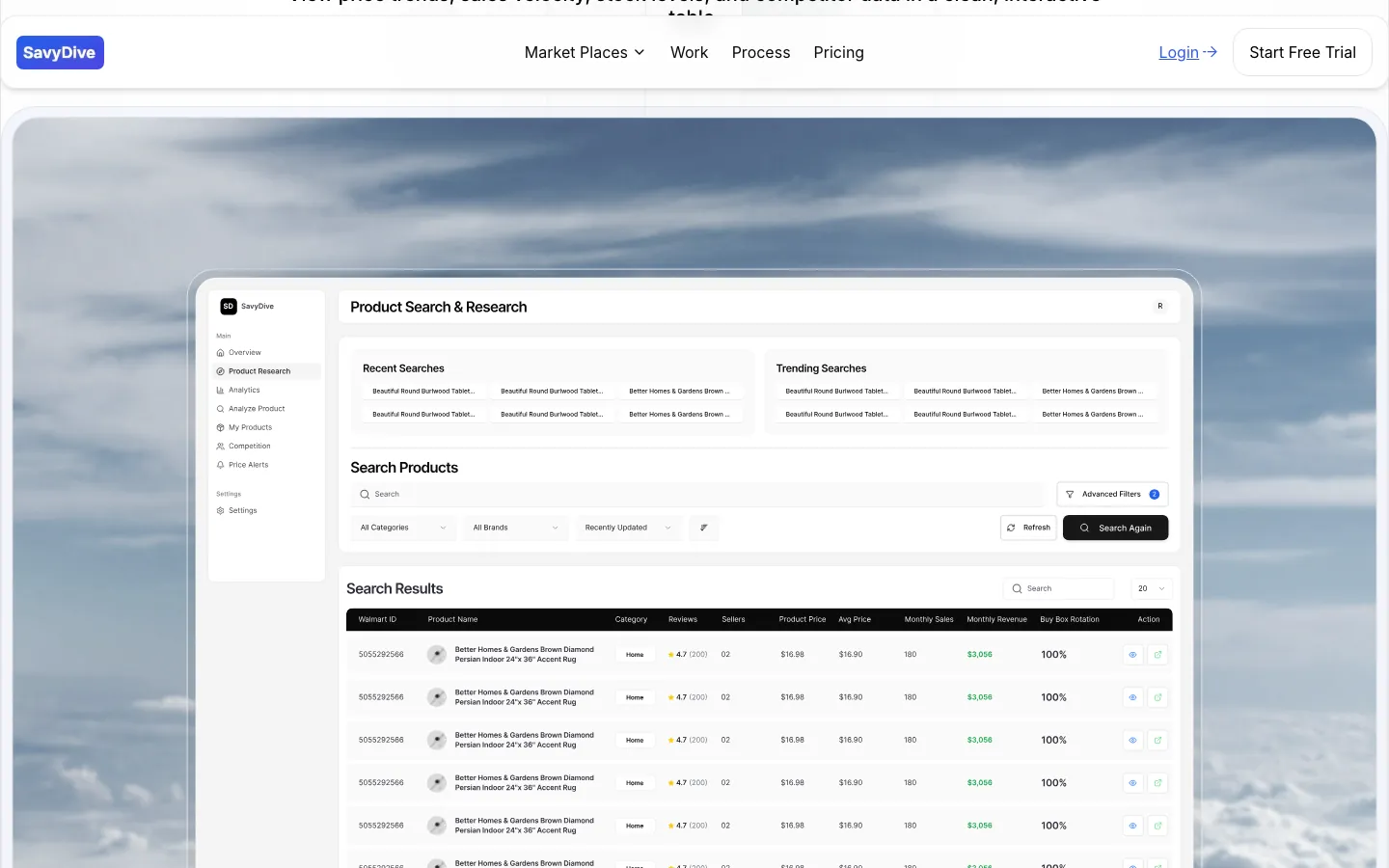
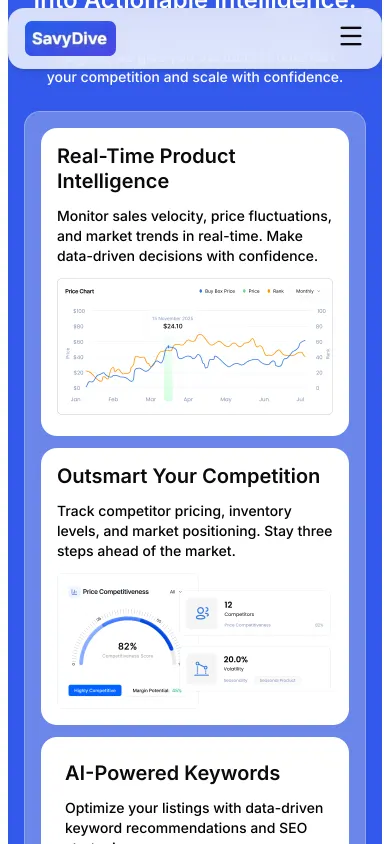
SavyDive
SaaS product
Product research dashboard. A data-rich research dashboard that lets sellers search, filter and compare Walmart products in one table.
Read the case studyThe approach
Express gives you almost no structure, which is both its appeal and its risk. Without rules, route files grow into thousand-line scripts that mix database queries, business logic and HTTP details. My quote includes the structure: where routes, validation, business rules and data access live, so the API stays readable as it grows and new developers can find their way.
You work directly with me from requirements through launch. That keeps product context close to technical decisions and avoids the gaps that appear when strategy, interface, backend, and deployment are treated as separate problems.
What I can build
The scope is shaped around your users, operating reality, and the smallest responsible path to value.
APIs your own apps call and APIs you expose to partners, with versioned routes and documented request and response shapes.
Middleware for sign-in, roles, rate limits and request validation, applied consistently instead of copied into each route.
Endpoints that receive events from payment, ecommerce and CRM platforms, check their signatures and hand the work to a job.
Backends organized by feature, so orders, users and billing each have their own folder of routes, rules and tests.
Inside the API
Express doesn't decide these things for you. This is how each one is handled in the APIs I deliver.
| Area | How it's handled |
|---|---|
| Structure | Thin route files that call service functions; business rules and database code live in their own modules |
| Validation | Schemas for bodies, queries and parameters, checked before any handler runs, with clear field-level messages |
| Authentication | Sessions or tokens chosen for your clients, with role checks applied per route |
| Errors | One error handler and one response shape, so clients always know what went wrong and why |
| Security basics | Security headers, CORS limited to your domains, body size limits and rate limiting on sign-in and public endpoints |
| Documentation and tests | An OpenAPI file and automated tests for the endpoints that carry money, data or permissions |
New API or existing app
For a new API, I begin with the contract: endpoints, inputs, outputs and errors, agreed with you and whoever builds the front end. Then I set up the project structure, validation, auth and error handling before writing features, so every endpoint is built the same way.
For an existing app, I read the code and run it, then send a short report on what's risky, such as missing validation, inconsistent errors or unhandled promise rejections, and what I'd fix first. You choose what goes into the quote. Many apps need a cleanup and an Express 5 upgrade, not a rewrite.
Cost drivers
The number of endpoints matters less than what they do. A read-only catalog API is quick. Endpoints that move money, change permissions or call other services need more validation, tests and failure handling. Other drivers are the number of client types (web, mobile, partners), whether documentation must be public, file uploads, and moving data from an older system.
The process
1. You describe the API or send the current code, and I reply within 24 hours with questions or a recommendation.
2. We agree the endpoint list, auth model and hosting in writing, and you get a fixed quote.
3. I build on staging with documentation and tests, and you or your front-end developer test against it as endpoints land.
4. After your approval, it goes live on hosting in your name, and 15 days of free support begin.
What the work should create
Pricing
How pricing works
Client feedback
Reviews from clients I have worked with remotely, quoted as they wrote them.
The process
You get a senior engineering partner—not a black box. The process stays direct, collaborative, and focused on outcomes.
Clarify the problem, users, constraints, and measure of success.
Shape the right product, technical plan, and delivery path.
Create in focused iterations with quality visible at every step.
Test, deploy, measure, and improve with confidence.
Common questions
You get a fixed US-dollar quote after I read what the API needs to do. My policy is to charge about half of what an agency would for the same scope.
Yes. Express is mature, widely used and well understood by developers. Production readiness comes from what's built around it: validation, authentication, rate limits, logging, error handling and a sound deploy setup, all of which I include.
Yes. Express 5, released in October 2024, changes route pattern syntax, removes several old methods, and leaves the request body undefined until it's parsed. I update the routes, replace removed calls, test every endpoint, and remove the async wrappers that Express 5 no longer needs.
Yes. I write an OpenAPI description with every endpoint, its inputs, outputs, error responses and authentication, so front-end and partner developers can build against it without asking.
For most APIs, Express is a sound default. If your front end is Next.js and the backend is small, route handlers inside Next.js may be enough. My quote says which I'd use and what you gain or give up.
Yes. I work with MySQL, PostgreSQL and MongoDB, and build React and Next.js front ends, so the full stack can come from one developer.
You review everything on staging and pay the second 50% on final delivery. Fifteen days of free support follow, and after that I can stay on for maintenance if you want.
Start a conversation
Tell me what you’re building, where you are in the process, and what success looks like. I’ll get back to you with a clear next step within 24 hours.
ali@bealinawaz.com