AI-assisted SaaS products
Features inside subscription products where AI saves the user a step, measured against how they did the job before.
Technology expertise / Ali Nawaz
I build AI features into real web products, calling the major model APIs from Node.js and PHP servers. Most of what I've learned is about the code around the model: getting the right context in, getting reliable data out, and handling the moments when the model is wrong, slow or unavailable.
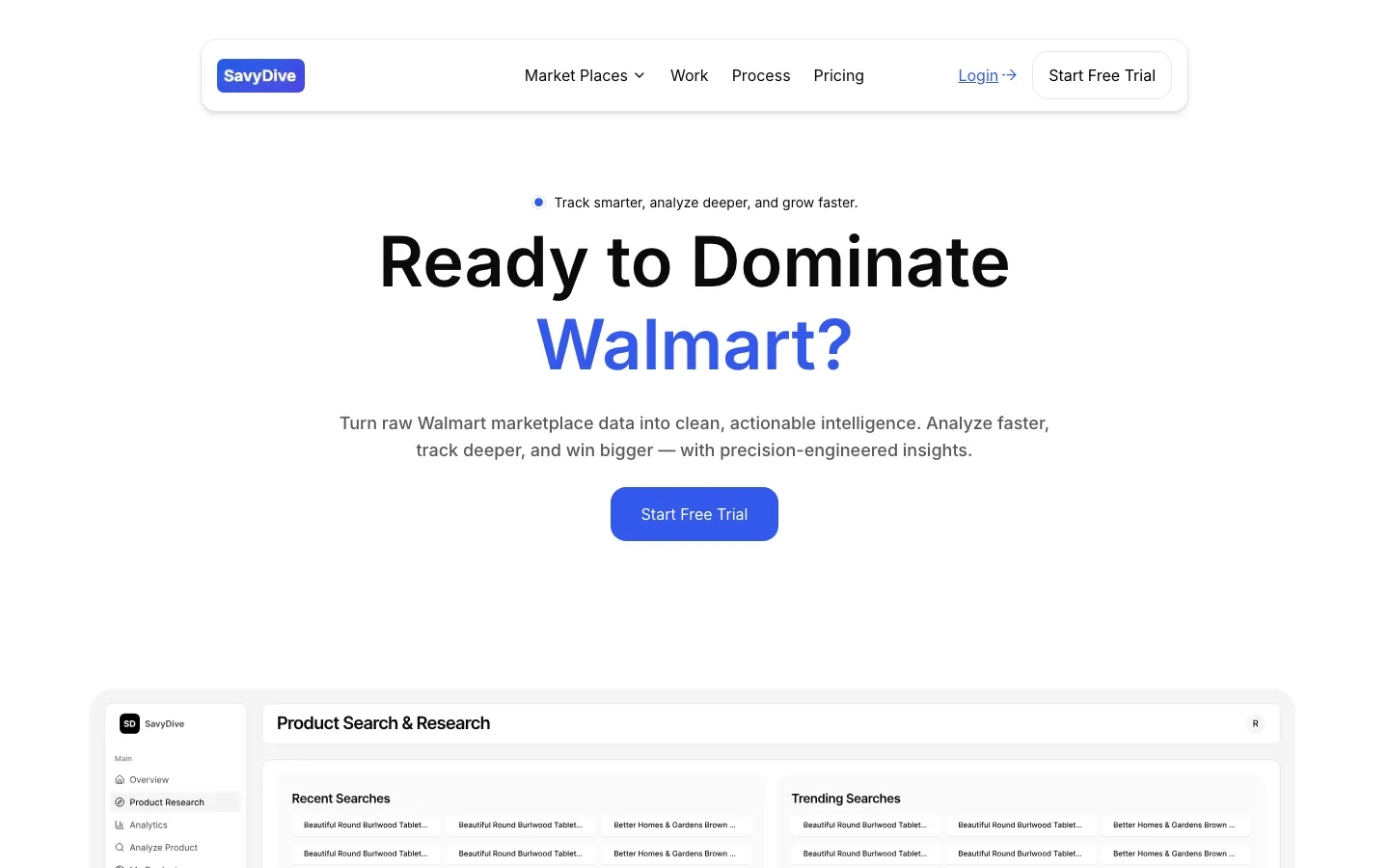 Enlarge screenshot: SavyDive homepage hero
Recent project
SavyDive
SaaS product
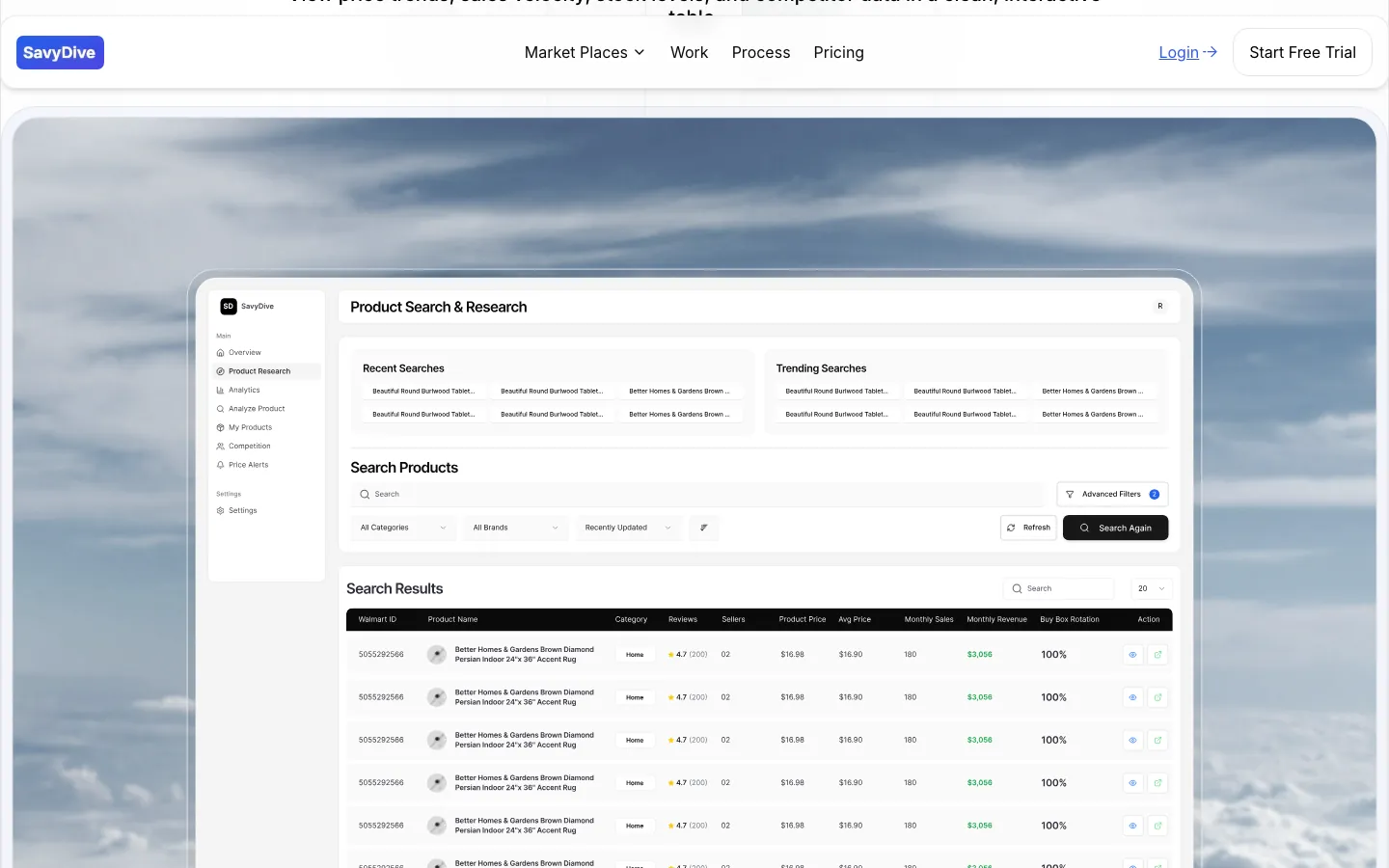
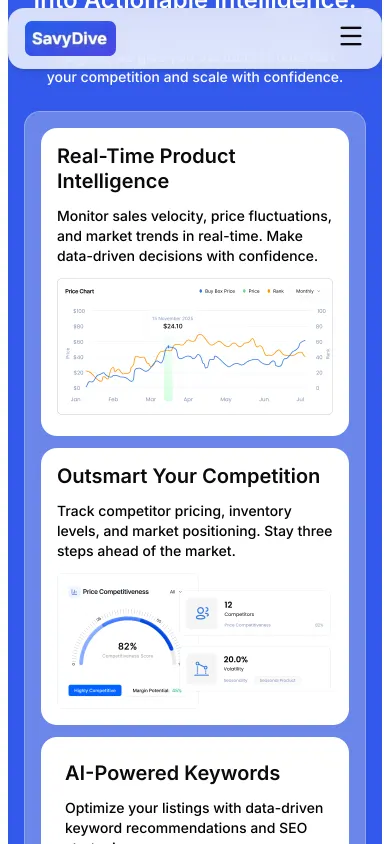
Product research dashboard. A data-rich research dashboard that lets sellers search, filter and compare Walmart products in one table.
Read the case studyThe approach
I treat a model call like a call to an unreliable outside service that accepts very flexible input. It needs a contract for what comes back, a timeout, a fallback, logging and a test set. Prompts matter, but most of the improvements I see come from better context and stricter output, not cleverer wording.
You work directly with me from requirements through launch. That keeps product context close to technical decisions and avoids the gaps that appear when strategy, interface, backend, and deployment are treated as separate problems.
What I can build
The scope is shaped around your users, operating reality, and the smallest responsible path to value.
Features inside subscription products where AI saves the user a step, measured against how they did the job before.
Retrieval over company documents: chunking, embeddings, search and citations, so every answer points to its source.
Generation constrained by a schema, so the result is data the app can store and check, not paragraphs to parse.
Tool calling, where the model proposes an action and my code decides whether it's allowed to run.
Toolkit
The tools change quickly, so I keep each layer replaceable.
| Layer | What I use |
|---|---|
| Model access | The providers' official SDKs or plain HTTP from a Node.js or PHP server, never from the browser |
| Output | JSON schemas with the provider's structured output mode, plus validation in my own code |
| Context | Retrieval from a database or vector index, passing only the fields the task needs |
| Actions | Tool calling with an allow-list of functions and a permission check on every call |
| Quality | An evaluation set of real cases, run before every release |
| Operations | Logs of inputs, outputs, latency and token use, with limits per user |
Patterns
Structured output comes first. OpenAI and Anthropic both offer modes that constrain a response to a JSON schema, and I define those schemas with the same validation library the rest of the app uses, so model output passes the same checks as a form submission.
Retrieval comes before fine-tuning. When a model needs to know your business, I give it the relevant documents at request time, which is cheaper, easier to update and easier to audit than training a custom model. And a small evaluation set exists from day one: a few dozen real cases, rerun after every change.
Pitfalls
Prompt injection is the one most teams miss. Any text the model reads, such as a user message, an uploaded document or a web page, can contain instructions. So a model never gets more permission than the user behind it, secrets stay out of prompts, and any action that changes data needs a code-level check or human approval.
The others are quieter: sending whole records when three fields would do, which raises cost and exposes data; no timeout, so a slow provider freezes a page; and no logging, so nobody can explain a bad answer a week later.
When not to
If the rules can be written down, ordinary code is cheaper, faster and gives the same answer every time. Calculations, eligibility checks, pricing and anything legally binding belong in code, with AI at most explaining the result. I'd also hold off when there's no way to judge output quality, because then nobody can tell whether it works.
When a project does suit AI, my AI Application Development and AI Integration service pages explain how I scope and quote the work.
What the work should create
Pricing
How pricing works
Client feedback
Reviews from clients I have worked with remotely, quoted as they wrote them.
The process
You get a senior engineering partner—not a black box. The process stays direct, collaborative, and focused on outcomes.
Clarify the problem, users, constraints, and measure of success.
Shape the right product, technical plan, and delivery path.
Create in focused iterations with quality visible at every step.
Test, deploy, measure, and improve with confidence.
Common questions
AI-assisted features inside SaaS products, document and knowledge workflows, and tools that generate structured content or analysis, always as part of a complete web application.
Yes. I can review how the model is called, add structured output and evaluation, fix cost or latency problems, and harden the feature against bad output without starting over.
The major hosted model APIs. I write the code so the provider sits behind one interface, because the best choice for a given task changes often.
Sometimes, but a provider's own SDK with a few small helper functions is often easier to debug and carries fewer dependencies. I decide per project.
With a fixed set of real inputs and expected outcomes, scored after each change. Some checks are exact, such as whether a field was extracted correctly; others are reviewed by a person or graded against a written rubric.
It can be, with care. Major providers state they don't train on API data by default, but I still send only the fields a task needs and check the retention terms of the provider chosen.
Yes, from the server side: a custom WordPress plugin or a Shopify app calls the model API, so keys never reach the browser. My 15 free WordPress plugins show how I structure plugin code.
Start a conversation
Tell me what you’re building, where you are in the process, and what success looks like. I’ll get back to you with a clear next step within 24 hours.
ali@bealinawaz.com